EMMA

Setting the groundwork for AI in infrastructure

Client

Mott McDonald

Role

Product Designer

Team

EMMA, MOATA Data Science

Nasrine Tomasi (Head of Artificial Intelligence), YJ Kim (Data Science Lead), Paul Skidmore (Product Manager), Alex Bone (Design Director), Sam Parkinson (Engineering Lead), MOATA Data Science engineering team

EMMA

Setting the groundwork for AI in infrastructure

Client

Mott McDonald

Role

Product Designer

Team

EMMA, MOATA Data Science

Nasrine Tomasi (Head of Artificial Intelligence), YJ Kim (Data Science Lead), Paul Skidmore (Product Manager), Alex Bone (Design Director), Sam Parkinson (Engineering Lead), MOATA Data Science engineering team

Establishing a human-centered AI framework in MOATA,
empowering engineers and project managers to make data-driven decisions, and extract actionable insights

Establishing a human-centered AI framework in MOATA,
empowering engineers and project managers to make data-driven decisions, and extract actionable insights

Overview

Mott MacDonald, a global engineering and development consultancy, began exploring AI solutions to enhance infrastructure design and project planning. The initiative aimed to integrate AI into the digital internal tool ecosystem, MOATA, to support automation, insight generation, and data-driven decisions for civil engineers and project managers. Despite not being a tech-native company, there was increasing interest in integrating AI, though no clear product or design process was yet in place. 

Overview

Mott MacDonald, a global engineering and development consultancy, began exploring AI solutions to enhance infrastructure design and project planning.

The initiative focused on integrating AI into MOATA, the company’s internal digital ecosystem, to enable automation, insight generation, and data-driven decision making for engineers and project managers. Although interest in AI was growing, the organization lacked an established product or design process to guide this integration

Challenge

The project involved complex, fragmented data, from geospatial and climate information to budgets and HR, making automation and predictions unreliable. Users needed clarity on what the system “knew” versus didn’t, while the organization’s low AI maturity made it hard to align technical possibilities with real user needs

Approach

As part of the EMMA team, I took a proactive role in laying the foundations for human-centered AI integration: advocated for involving end users early to shape use cases based on real pain points, not just technical possibility, and played a key part on developing a user-centered AI strategy, for adoption across MOATA products

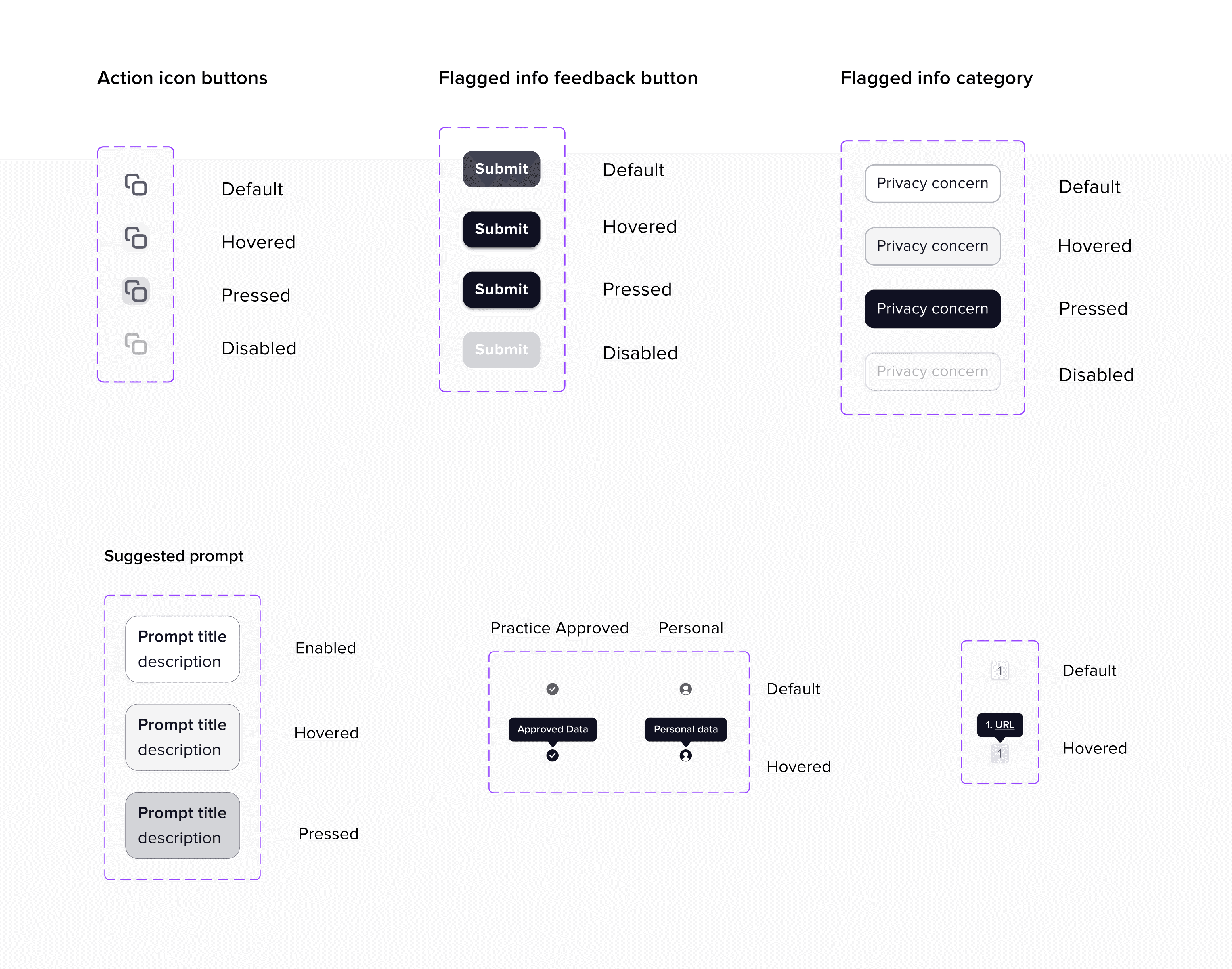
EMMA Visual Identity

Simple, accessible and trusthworthy

Brand integration with distinction

Seamlessly fit within the MOATA ecosystem while standing out as a recognizable new feature

Accessibility for all users

From technical experts to non-technical stakeholders, making EMMA approachable across complex project lifecycles

Simplicity and legibility

The visual identity emphasized clarity and platform-agnostic design, ensuring usability across diverse contexts and interfaces.

MOATA Integration

Making EMMA accessible across products

Making EMMA accessible
across products

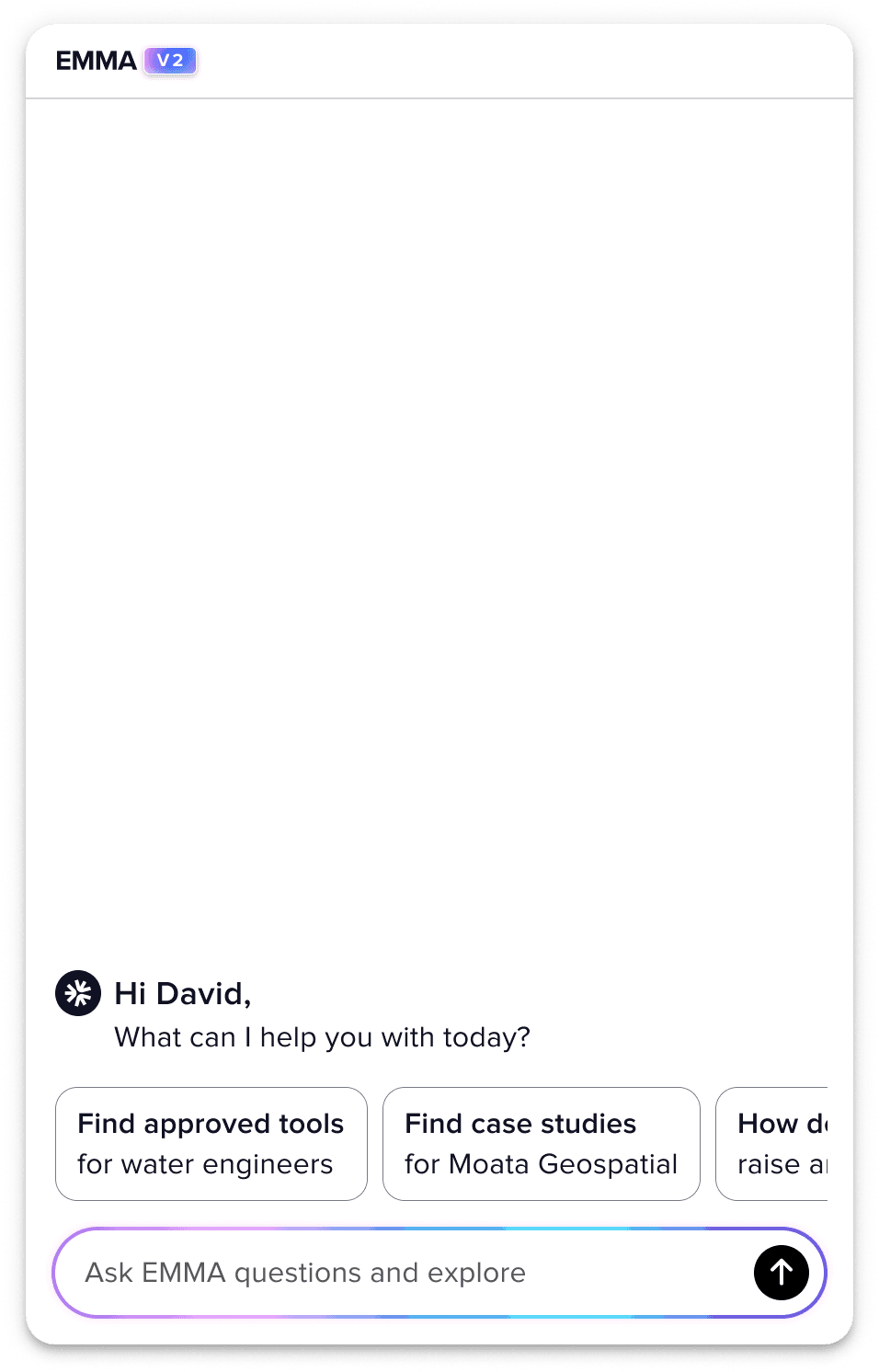
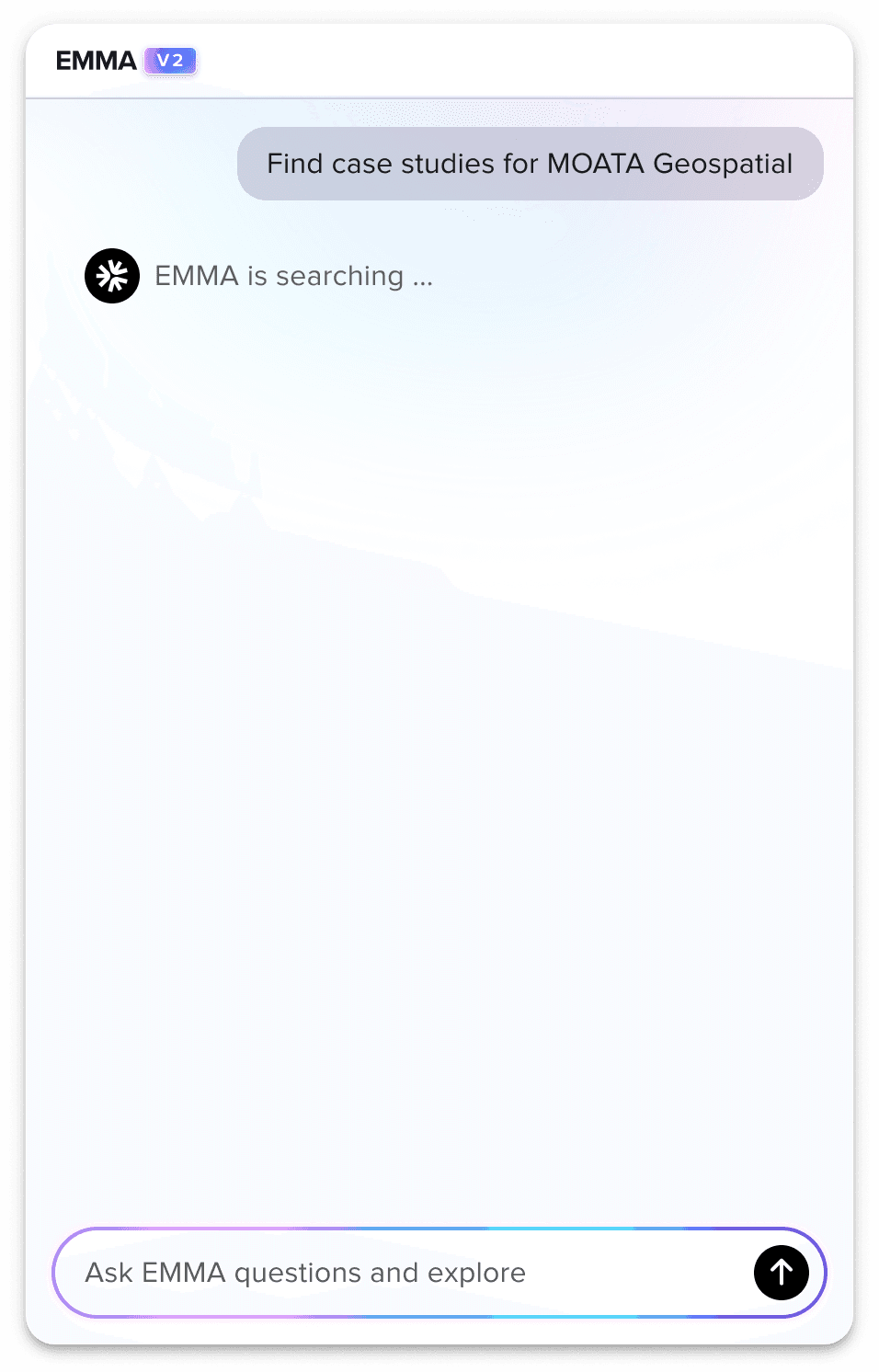
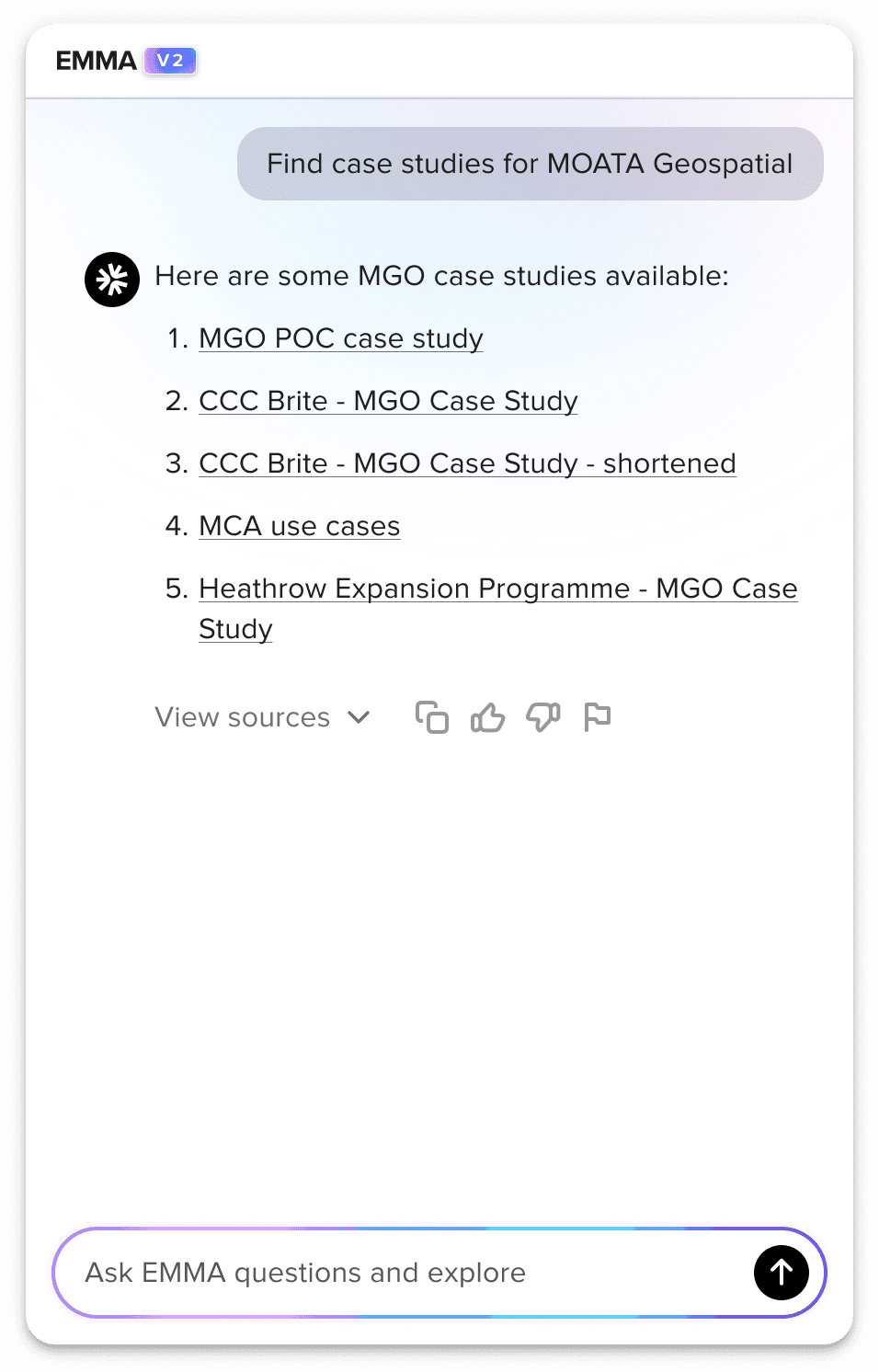
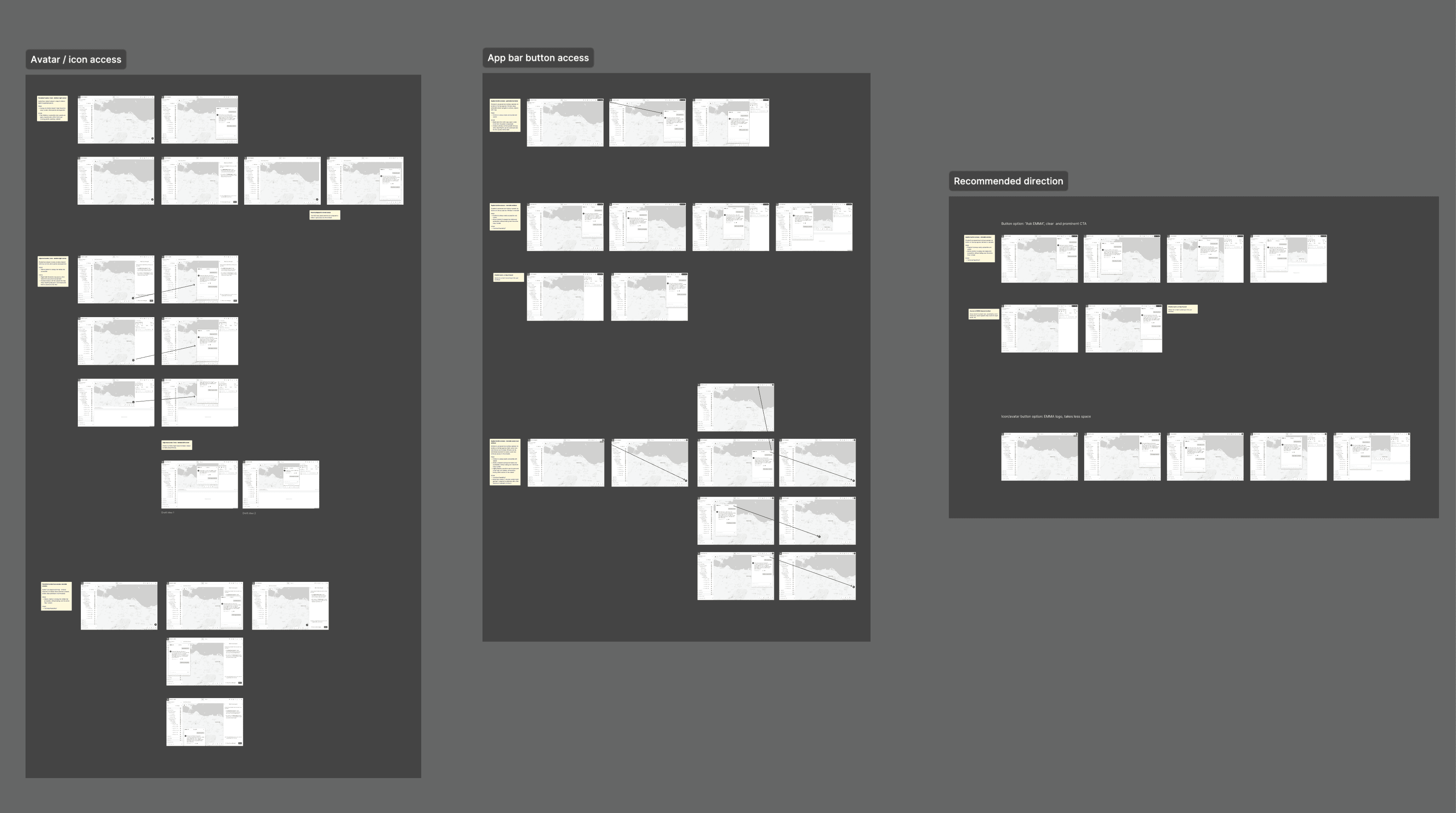
Integrating EMMA across MOATA products required navigating a rigid architecture and addressing the varied needs of different tools and their users

The process involved multiple rounds of wireframing and close collaboration with front and backend engineers to develop a cohesive MVP that could function across platforms while remaining user friendly and adaptable to diverse workflows
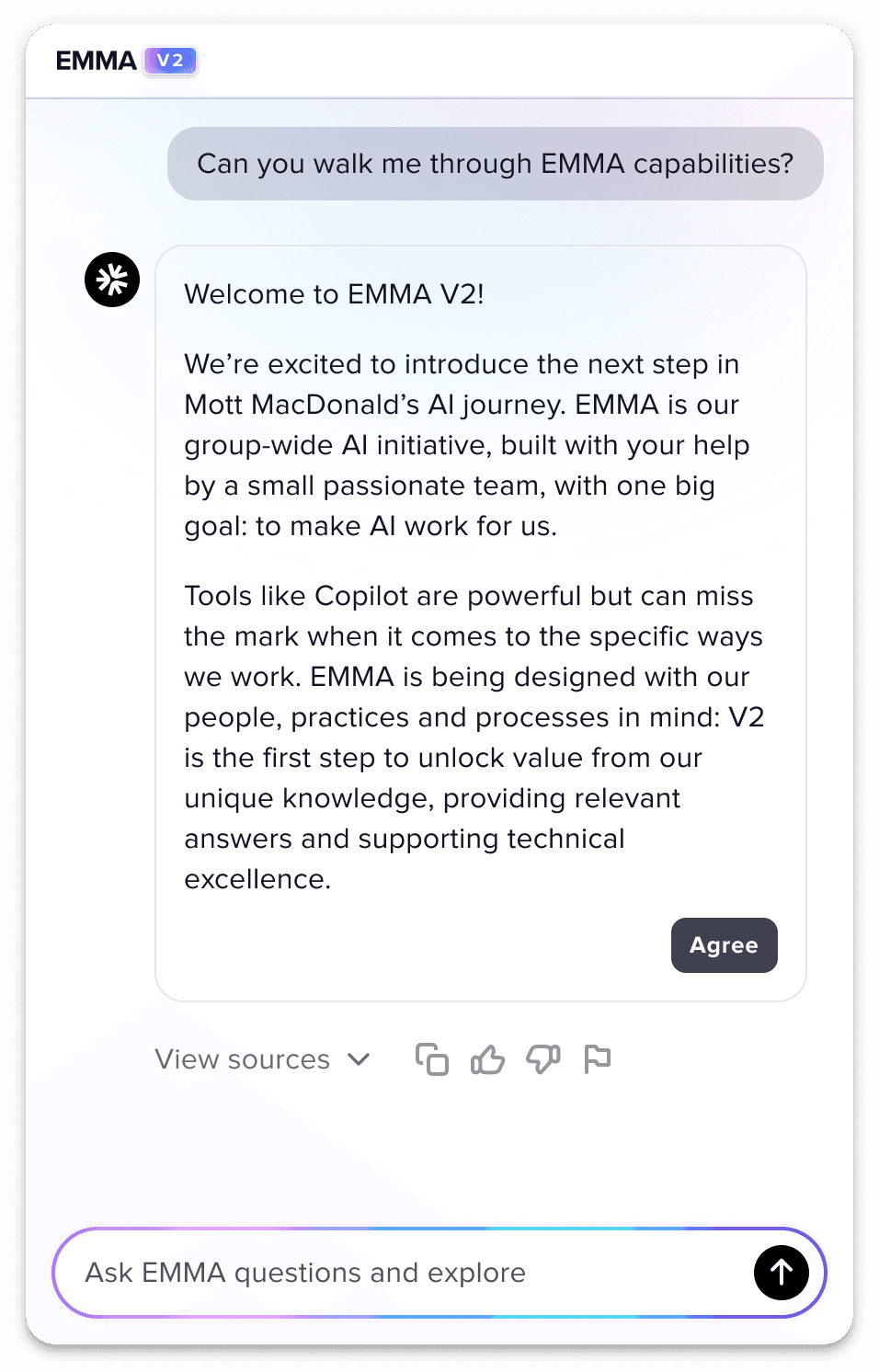
Communicating value

Early adoption and user feedback

EMMA V2 was launched within MOATA, focused on gathering early feedback and inform further development. Initial response from users was largely positive, particularly around the clarity, usability and easy access


Outcome

The release helped shift internal conversations from abstract AI potential to tangible value, grounding further investment in real-world utility and user needs. It also introduced the organization to design patterns for uncertainty, override mechanisms, and the crucial need for ensuring data quality and accuracy.

While still in its early stages, this work established the first iteration of a human-centered AI design framework within Mott MacDonald’s digital portfolio, creating a foundation for more scalable AI features across infrastructure tools.

The release helped shift internal conversations from abstract AI potential to tangible value, grounding further investment in real-world utility and user needs. It also introduced the organization to design patterns for uncertainty, override mechanisms, and the crucial need for ensuring data quality and accuracy.

While still in its early stages, this work established the first iteration of a human-centered AI design framework within Mott MacDonald’s digital portfolio, creating a foundation for more scalable AI features across infrastructure tools.

User adoption and positive feedback

Human-centered AI foundation

Informed investment
for development

User adoption and positive feedback

Human-centered AI foundation

Informed investment
for development